



Function
BIRKENSTOCK Boston Soft Footbed Suede Leather Antique White: First-Week Break-In and Hard-Floor Walking Guide · BIRKENSTOCK Contour Walk
Why the Boston Soft Footbed Feels Different in the First Week
The BIRKENSTOCK Boston Soft Footbed in suede leather is a clog, but it does not behave like a rigid wooden shoe. The upper is suede leather in Antique White, a soft off-white that hides everyday dust better than bright white. Underfoot, the soft footbed adds a layer of foam cushioning above the cork, so the first steps feel padded rather than hard. That padding can trick you into thinking the shoe is already broken in. It is not. The cork beneath the foam still needs time to adapt to your heel, arch, and forefoot. In the first week, you are breaking in the cork, not the suede. The suede stretches a little across the instep, but the real change happens in the footbed. Expect the Boston to feel snug across the top of your foot for two or three days, then gradually settle as the cork compresses where you press hardest. This guide covers what to do day by day, how to adjust the strap, and how to walk on tile, concrete, and wood without fighting the shoe.
Day 1 to Day 3: Cork Footbed Break-In and Strap Fit
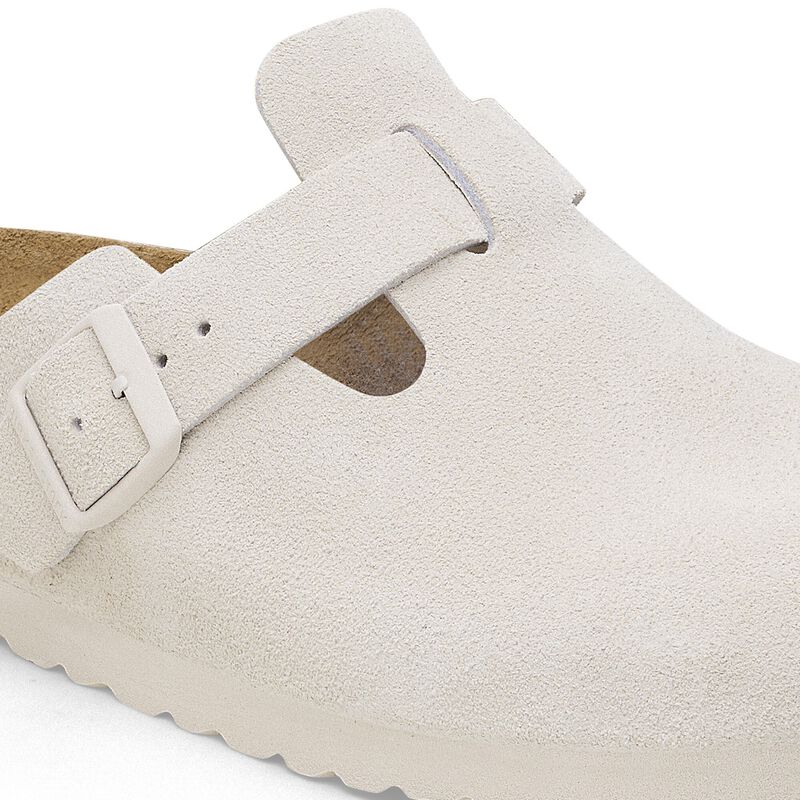
Start with the strap on the loosest hole that still keeps the clog from sliding off your heel. The Boston has a single adjustable strap across the instep. In suede leather, that strap will soften with wear, so do not cinch it tight on day one. If your instep is high, you may need the strap on the last hole for the first few days. If your instep is low, the middle hole is usually right. The goal is to keep the foot from lifting out of the shoe when you walk, without pressing the suede into the top of your foot. During these first days, wear the Boston for 30 to 60 minutes at a time. Walk indoors on carpet or a rug first. The cork footbed will begin to mold to your heel and the ball of your foot. You may feel a slight ridge under your arch. That is the footbed's natural arch support, and it should feel firm, not sharp. If it feels sharp, your foot is sitting too far forward or too far back. Your heel should sit in the heel cup, and your toes should have a thumb's width of space in front. The soft footbed's foam layer makes this period more comfortable than a classic cork footbed, but the cork still needs pressure to adapt.
Day 4 to Day 7: Walking on Hard Floors
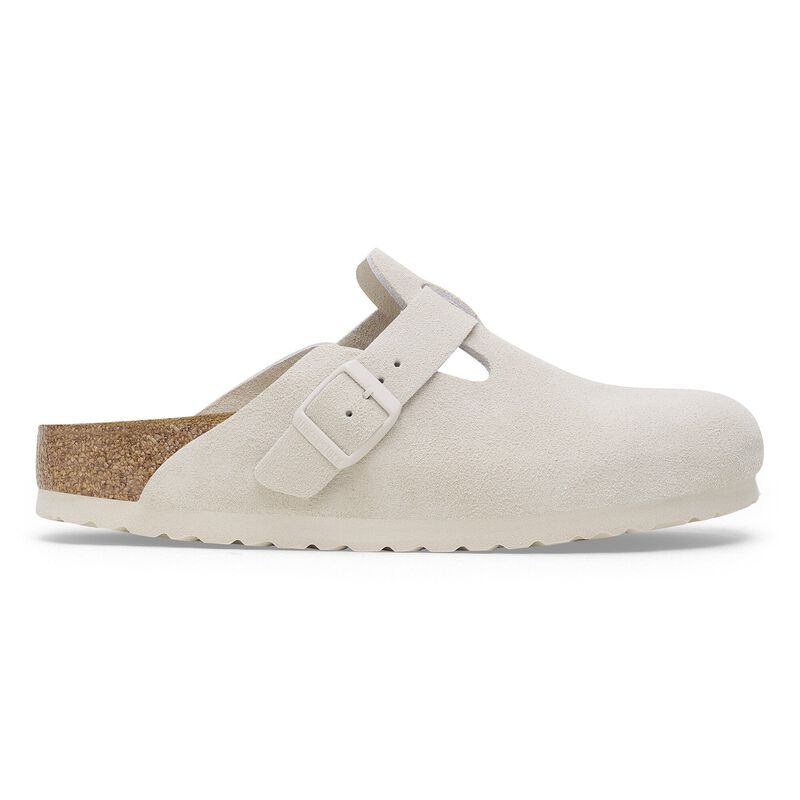
Hard floors are where the Boston Soft Footbed proves itself. Tile, concrete, and hardwood send shock up through the heel. The soft footbed's foam layer absorbs some of that impact, but the cork still does the heavy lifting. By day four, you can extend wear to 2 to 3 hours. Walk on hard floors with a relaxed stride. Do not slam your heel down. Let your foot roll from heel to toe. The cork footbed will start to feel less like a generic insole and more like a footprint. You may notice the suede leather upper has warmed and stretched slightly across the instep. That is normal. If the strap now feels too loose, move it one hole tighter. If the top of your foot feels pressure, move it one hole looser. The Boston is a lounge fit, which means the clog is roomy through the forefoot and midfoot. Your toes should be able to spread. If your toes feel cramped, the shoe is too small, not too new. Width matters here: BIRKENSTOCK offers narrow and regular width. The Boston Soft Footbed in suede leather is available in both. If you have a wide forefoot, regular width is usually the better choice. If you have a narrow foot, narrow width keeps the clog from feeling sloppy.
How the Soft Footbed Changes the Break-In
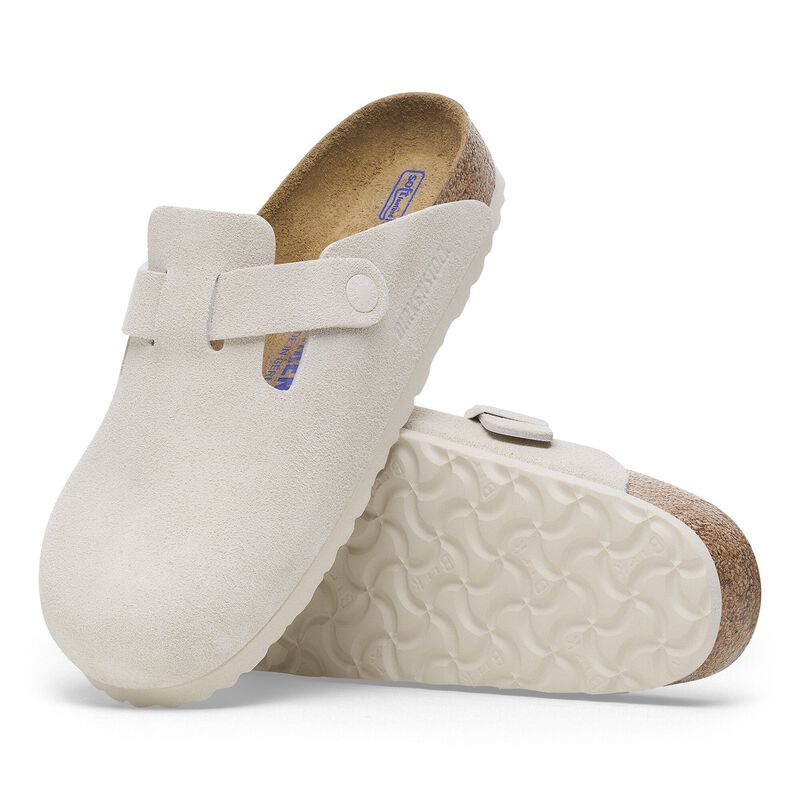
A classic BIRKENSTOCK cork footbed is firm from day one. The soft footbed adds a layer of foam between the cork and the suede lining. That foam compresses quickly, usually within the first few hours, and gives you a cushioned feel while the cork underneath begins to mold. The result is a break-in that feels less punishing but still requires patience. You are not breaking in foam; you are breaking in cork. The cork responds to heat and pressure. Your body heat softens it slightly, and your weight presses it into a shape that matches your foot. In the first week, the changes are subtle. By the end of week two, the heel cup feels deeper, and the arch feels more supportive. By the end of the first month, the Boston feels like it was made for your foot. The suede leather upper also changes. Suede is softer and more forgiving than smooth leather. It stretches a little, but it also brushes clean. Antique White shows scuffs more than darker colors like Black, Mocha, or Navy, but a suede brush brings it back. If you choose a lighter color like Faded Khaki, Faded Lime, or Pure Sage, keep a brush handy. If you choose a darker color like Wine, Midnight Blue, or Forest, scuffs are less visible.
Strap Fit: Why One Hole Makes a Difference
The Boston's strap is not just decoration. It holds the clog on your foot. In suede leather, the strap has a little give, so you can fine-tune the fit. Start with the strap loose enough that you can slide one finger under it. If the clog slips off your heel when you walk, tighten one hole. If the strap leaves a red mark on the top of your foot, loosen one hole. During the first week, check the strap before every wear. Suede stretches with heat, so a strap that felt perfect on day one may feel loose on day four. That is not a defect; it is the nature of suede. Adjust and continue. If you have a high instep, you may need to punch an extra hole or use the last hole. If you have a low instep, the first hole may be too loose. In that case, consider a thicker sock or a different style. The Boston is a clog, so it will always have some heel movement. The strap should control that movement without cutting off circulation.
Hard Floors at Home, at Work, and While Traveling
Hard floors are everywhere: kitchen tile, office concrete, airport terminal, hotel lobby. The Boston Soft Footbed is a good choice for all of them because the cork footbed distributes pressure. When you stand on a hard floor, your weight normally concentrates under your heel and the ball of your foot. The cork footbed spreads that weight across the whole foot. The soft footbed adds a little cushioning, but the real benefit is the arch support. If you stand for long periods, the Boston keeps your foot from rolling inward. That reduces fatigue in your ankles and knees. For travel, the Boston is easy to slip on and off at security, and the suede leather packs flat. Antique White is a light color, so it shows dirt from city streets. If you travel in wet weather, choose a darker color like Basalt Gray, Dark Tea Tonal, or Midnight Blue. If you travel in dry heat, Antique White stays cooler because it reflects light. The Boston is not a hiking shoe, but it handles paved paths and museum floors well. For long walks on concrete, give yourself a week to break in the cork before you wear them all day.
Colors and Materials: What to Expect from Suede Leather
This Boston Soft Footbed is made of suede leather, which has a napped surface. Suede is softer than smooth leather and more breathable. It also stretches more. That stretch is helpful across the instep, but it means you should not buy a size too small. The Boston comes in a wide range of colors. Antique White is the color in this listing, a soft off-white that pairs with almost anything. Other options include Taupe, Black, Mocha, Forest, Mink, Port, Faded Khaki, Faded Lime, Navy, Midnight Blue, Wine, Elemental Blue, Green Tea, Faded Purple, Pure Sage, Basalt Gray, Oyster Tonal, Dark Tea Tonal, Basalt Gray Tonal, New Navy Tonal, and Thyme Tonal. Tonal colors have a monochrome look, where the strap and upper are the same shade. Non-tonal colors may have contrast stitching or a slightly different strap. All of them use the same cork footbed and suede leather. The color you choose affects how often you need to clean them. Lighter colors like Antique White, Faded Khaki, and Pure Sage show dirt sooner. Darker colors like Black, Mocha, and Midnight Blue hide it. If you want a color that works for both indoor and outdoor wear, Basalt Gray and Navy are good middle grounds. If you want a pop of color, Faded Lime and Faded Purple are fun but less versatile.
Break-In Tips for the First Week
Wear the Boston for short periods at first. Start with 30 minutes on day one, then add 30 minutes each day. Walk on different surfaces: carpet, tile, concrete. The cork footbed adapts to pressure, so varied surfaces help it mold evenly. Do not wear the Boston for a long walk on day one. Do not get the suede leather wet during the first week. Water can stiffen the suede and slow the break-in. If your feet hurt, take the shoes off and try again later. The Boston should feel comfortable, not painful. If you feel a sharp pain in your arch, the footbed may be too firm for you. In that case, try a different style or a softer footbed. If the strap rubs, adjust it. If the heel slips, tighten the strap. If the toes feel cramped, check your size. The Boston should have room for your toes to move. If you have narrow feet, try the narrow width. If you have wide feet, try the regular width. The right width makes the break-in easier.
When to Move On to Longer Walks
After the first week, you can start wearing the Boston for longer periods. If you have followed the steps above, the cork footbed should feel noticeably different. The heel cup should feel deeper. The arch should feel more supportive. The suede leather should feel softer. At this point, you can wear the Boston for a full day on hard floors. You can walk to the store, stand in the kitchen, or travel through an airport. The Boston Soft Footbed is not a performance walking shoe, but it is a comfortable clog for everyday use. If you plan to walk miles on concrete, consider a style with a back strap, like the Milano or the Tokyo. The Boston is a clog, so it relies on your foot to stay on. For casual walking, it works well. For serious distance, look for a BIRKENSTOCK with a back strap. The cork footbed is the same across styles, so the break-in process is similar. Once you have broken in one pair, the next pair is easier.
Cleaning and Maintaining Suede Leather
Suede leather needs a little care. Brush it with a suede brush to remove dust and restore the nap. If it gets wet, let it dry away from direct heat. Do not put it in the washing machine. For Antique White, use a suede eraser for scuffs. For darker colors, a brush is usually enough. The cork footbed does not need water. If it gets dirty, wipe it with a damp cloth and let it dry. Do not soak the cork. The soft footbed's foam layer is under the suede lining, so it does not need cleaning. If the footbed smells, sprinkle baking soda on it, let it sit overnight, and brush it off. Replace the footbed if it becomes compressed or cracked. BIRKENSTOCK sells replacement footbeds for some styles, but the Boston's footbed is not removable. If the suede leather upper wears out, the shoe is done. With proper care, the Boston Soft Footbed in suede leather can last for years.
Final Thoughts on the First Week
The BIRKENSTOCK Boston Soft Footbed in suede leather is a comfortable clog, but it still requires a break-in period. The first week is about adjusting the strap, letting the cork footbed mold to your foot, and learning how to walk on hard floors. The soft footbed makes the process easier, but it does not eliminate it. Be patient. Wear the Boston for short periods. Adjust the strap as needed. Walk on different surfaces. By the end of the week, the shoe should feel like yours. If it does not, check your size and width. The right fit makes all the difference. Antique White is a versatile color that works with many outfits, but it shows dirt. If you want a low-maintenance color, choose a darker option like Black, Mocha, or Midnight Blue. Whatever color you choose, the cork footbed and suede leather will reward you with comfort that improves over time.
View this BIRKENSTOCK style in the shop
People also search
BIRKENSTOCK Boston suede water stains how to clean
BIRKENSTOCK Birko-Flor vs leather which lasts longer
how to stop heel slipping in BIRKENSTOCK Arizona
BIRKENSTOCK sandals for sightseeing Europe cobblestones
BIRKENSTOCK Arizona vs Boston which is better for walking
can you wear BIRKENSTOCK Boston in rain
BIRKENSTOCK Arizona two strap too loose how to tighten
BIRKENSTOCK arch support sandals for sightseeing
BIRKENSTOCK kids vs adult sizing for small feet
BIRKENSTOCK Boston shearling vs regular Boston
BIRKENSTOCK Arizona two strap sandal fit true to size
BIRKENSTOCK Boston taupe suede outfit ideas
BIRKENSTOCK Arizona white vs black everyday wear
BIRKENSTOCK EVA sandals for beach and pool
best BIRKENSTOCK for backyard home and errands
BIRKENSTOCK Arizona oiled leather darkens over time
are backless BIRKENSTOCK clogs good for walking
BIRKENSTOCK sandals for plantar comfort walking
BIRKENSTOCK Arizona metallic vs classic leather
BIRKENSTOCK Arizona mink vs tobacco oiled leather
BIRKENSTOCK Madrid big buckle trend 2026
BIRKENSTOCK Arizona outfit with linen summer clothes
how to choose BIRKENSTOCK width letter R or N
BIRKENSTOCK sandals waterproof options EVA
how often to replace BIRKENSTOCK cork footbed
best color for BIRKENSTOCK Boston Soft Footbed Suede Leather Antique White Lounge Fit everyday wear
are BIRKENSTOCK good for standing cooking at home
BIRKENSTOCK Milano ankle strap vs Arizona stability
BIRKENSTOCK footbed sandals break-in no blisters
are BIRKENSTOCK sandals good for cobblestone city streets
Trending BIRKENSTOCK searches
BIRKENSTOCK wide width
BIRKENSTOCK original footbed
ankle strap Milano
BIRKENSTOCK stone Arizona
BIRKENSTOCK platform Arizona
BIRKENSTOCK black Arizona
BIRKENSTOCK Madrid sandal
contoured cork-latex footbed
oiled leather clog care
BIRKENSTOCK unisex sizing
BIRKENSTOCK for work standing
arch support sandals
thong sandal Gizeh
BIRKENSTOCK white Arizona
BIRKENSTOCK mink oiled leather
Birkenstock clog socks
BIRKENSTOCK shearling Boston
BIRKENSTOCK new colors
BIRKENSTOCK beach EVA
BIRKENSTOCK Gizeh