



Function
BIRKENSTOCK Oswego Mixed Leather Concrete Gray Soft Sole: First-Week Cork Footbed Break-In for Hard Floors · BIRKENSTOCK Contour Walk
Your First Week in the BIRKENSTOCK Oswego
The BIRKENSTOCK Oswego in Concrete Gray is a low-profile sneaker that pairs mixed leather with a soft sole and the signature cork footbed. If you're used to cushioned athletic shoes, the first week can feel like a conversation between your feet and the shoe. That's normal. The cork footbed is designed to adapt, but it needs a little time and motion to start molding. This guide focuses on what to expect during the first seven days, how to dial in the strap fit, and how to handle hard floors without regret.
Before you wear them outside, check the width. BIRKENSTOCK offers the Oswego in both narrow and regular widths. If you have a wider forefoot or high instep, regular is likely your match. A quick test: stand up and see if your toes can spread without pressing against the sides. If they can't, size up or switch widths. The Oswego's mixed leather upper has some give, but the cork footbed does not stretch horizontally. Getting the width right upfront saves you from a week of pinched toes.
Days 1–3: Let the Cork Footbed Wake Up
The cork footbed in the Oswego is not flat. It has a cupped heel, a raised arch, and a toe bar. When you first put them on, you might feel pressure under your arch or along the outside of your foot. That's the footbed introducing itself. During days one through three, limit wear to short sessions—20 to 30 minutes at a time. Walk around your home, make a cup of coffee, sort laundry. The goal is to warm the cork with your body heat and let it start responding to your weight distribution.
Don't force a full day of errands right away. The cork footbed is firm by design, and your feet need to adjust to a more grounded stride. If you feel hot spots, take the shoes off and give your feet a break. The mixed leather upper in Concrete Gray is soft, but it also needs to flex. You can help by gently bending the shoe at the ball of the foot with your hands before each wear. This isn't cheating—it's preparation.
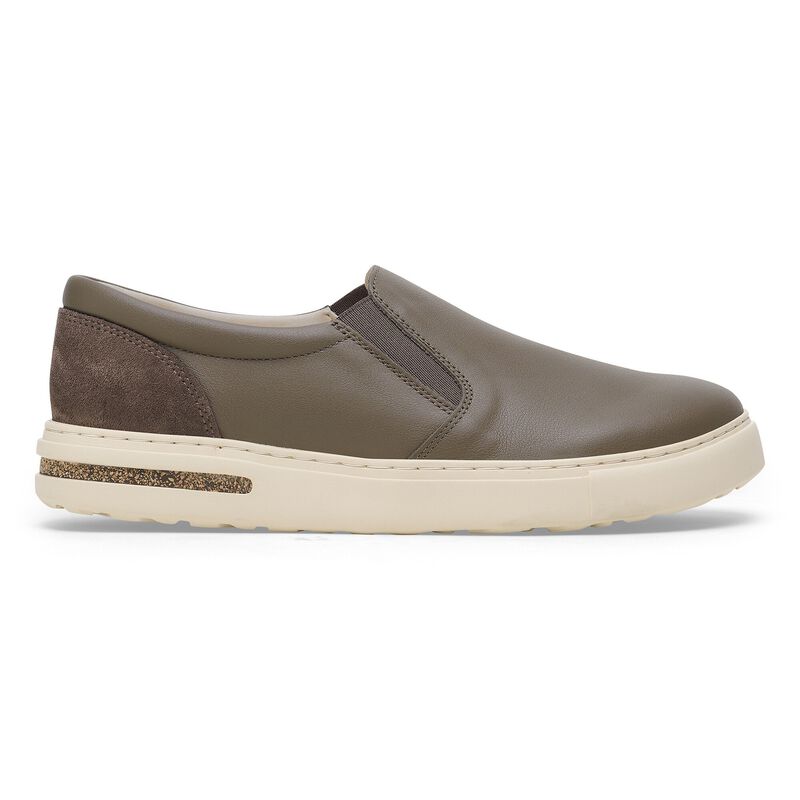
By the end of day three, many people notice the footbed feels slightly less rigid. That's the cork beginning to mold. The change is subtle, so don't expect a memory-foam collapse. Think of it as the shoe learning your footprint. The Oswego's soft sole adds a layer of cushioning under the cork, which takes some edge off hard surfaces, but the cork is still the star.
Days 4–7: Strap Fit and Walking Mechanics
The Oswego has a lace-up design, but the strap across the instep is where fit really happens. During the first few days, leave the laces a bit loose so your foot can settle into the footbed. As the cork starts to mold, you can tighten the laces for a more secure feel. The strap should hold your midfoot without cutting off circulation. If you can slide a finger under the strap, it's probably about right. If your foot slides forward when you walk, tighten the laces a quarter turn.
Walking mechanics matter. The Oswego encourages a more natural stride—heel lands, foot rolls forward, toes push off. On hard floors like tile, concrete, or hardwood, you'll feel more of the footbed's contours than you would on carpet. That's not a flaw; it's feedback. Your feet are learning to engage muscles that cushioned shoes let sleep. By day seven, that feedback often becomes comforting rather than jarring.
If you're on your feet all day, alternate the Oswego with another pair of shoes for the first week. This gives the cork time to rest and rebound. It also gives your feet a break from the new pressure points. Many BIRKENSTOCK fans keep a rotation: Oswego for errands and short walks, a more broken-in pair for long days. After the first week, the Oswego can take on more.
Hard Floors: What to Expect and How to Adapt
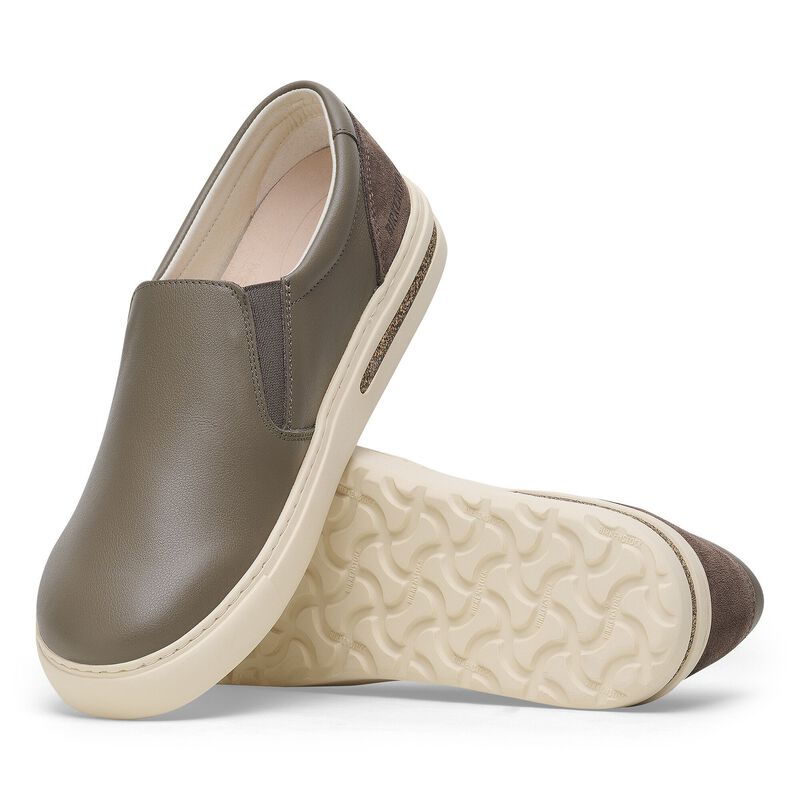
Hard floors are the ultimate test for any footbed. The Oswego's cork footbed is designed to absorb impact, but it's not a marshmallow. On concrete or tile, you'll feel a firmness underfoot. That firmness is what allows the footbed to support your arch instead of collapsing. The soft sole adds a touch of shock absorption, but it doesn't turn the Oswego into a running shoe. Think of it as a walking shoe with a conscience.
To make hard floors more comfortable during the break-in week, take shorter strides. Let your heel land softly and roll through. Avoid stomping. If you're standing in one place, shift your weight from foot to foot occasionally. This keeps the cork warm and helps it mold evenly. If you have a standing desk, consider a anti-fatigue mat for the first few days. It's not a requirement, but it can ease the transition.
The Concrete Gray mixed leather is a practical choice for daily wear. It hides scuffs better than lighter colors and pairs with everything from jeans to chinos. The soft sole is flexible, so you'll feel the ground beneath you—a plus for balance and proprioception. Just don't expect the Oswego to feel like a cloud. It's a supportive shoe, and support sometimes feels like work at first.
Strap Fit Fine-Tuning Through the Week
As the cork footbed molds, your foot may sit slightly lower in the shoe. That means the strap might feel looser by day four or five. This is a good time to re-adjust the laces. Start from the bottom and work your way up, keeping even tension. The goal is to hold the heel in place without pressing down on the top of your foot. If you have a high instep, you might need to skip the top eyelet or use a runner's loop for extra room.
The Oswego's strap is not adjustable like a buckle, so laces are your main tool. Don't be afraid to experiment. Some people prefer a snug midfoot and a loose toe box; others like uniform pressure. There's no single right answer. Pay attention to how your foot feels after 10 minutes of walking. If your toes go numb, loosen the laces. If your heel slips, tighten them. The mixed leather will stretch slightly, so a little snugness at first is okay.
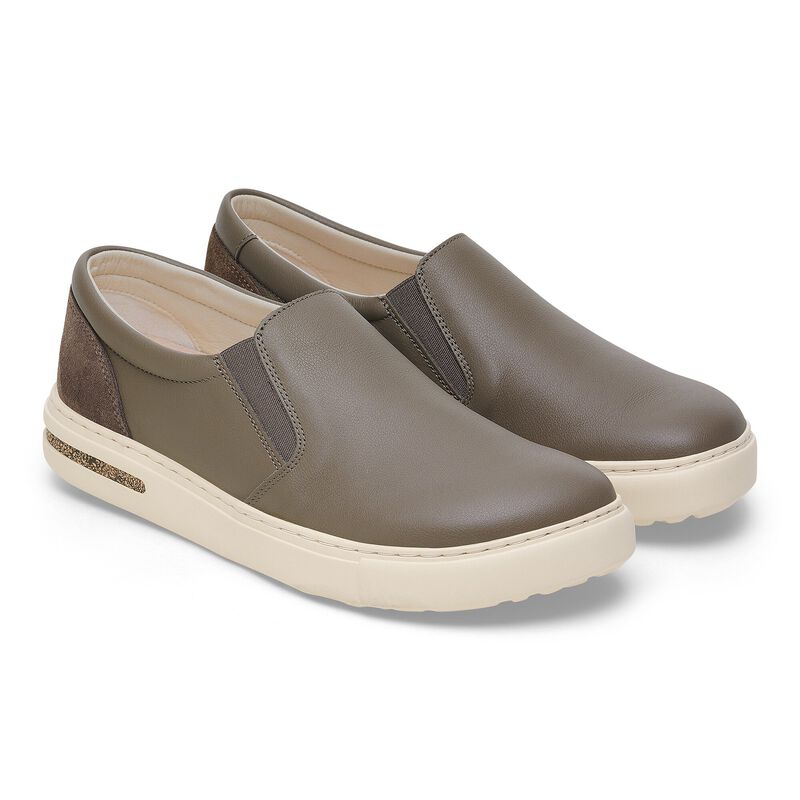
By the end of the first week, the Oswego should feel noticeably different from day one. The cork will have started to contour to your heel and arch. The leather will have softened at the flex points. You'll have a better sense of how the shoe handles hard floors and whether you need to adjust your stride. Most people find that the second week is when the Oswego really becomes theirs.
Cleaning and Care During Break-In
Keep the Oswego clean with a soft brush or damp cloth. Avoid soaking the leather or the cork footbed. If the footbed gets damp from sweat, let it air dry away from direct heat. The cork is sealed, but excessive moisture can degrade it over time. A little powder can help with odor if you're wearing them daily. The Concrete Gray color is forgiving, but a quick wipe keeps them looking sharp.
Don't apply heavy conditioners to the mixed leather during the first week. You want the material to breathe and adapt. After break-in, a light leather conditioner can keep it supple. The soft sole can be wiped with a damp cloth. Avoid harsh chemicals. The Oswego is designed for everyday wear, so a little patina is expected and even welcome.
When to Know You're Past the Break-In
You're past the break-in when you can wear the Oswego for a full day without thinking about your feet. The cork footbed will feel like it's cradling your arch rather than pressing on it. The strap will sit comfortably, and the leather will have flexed to your stride. On hard floors, you'll notice the firmness but not resent it. That's the sign that the cork has molded and your feet have adapted.
The first week is a investment in long-term comfort. The BIRKENSTOCK Oswego in Concrete Gray is not a disposable sneaker; it's a shoe that gets better with wear. Give it the time it needs, and it will reward you with support that lasts for seasons. Whether you're walking the dog, commuting, or traveling, the Oswego is ready—once you are.
View this BIRKENSTOCK style in the shop
People also search
BIRKENSTOCK Kyoto vs Boston clog comparison
BIRKENSTOCK footbed sandals for standing on hard floors
BIRKENSTOCK Arizona two strap sandal fit true to size
can you wear BIRKENSTOCK Boston in rain
BIRKENSTOCK oiled leather clog care rain and commute
BIRKENSTOCK Boston clog with socks in cold weather
BIRKENSTOCK men women unisex sizing how to choose
BIRKENSTOCK sandals for nurses and long shifts
BIRKENSTOCK Arizona mink vs tobacco oiled leather
BIRKENSTOCK arch support sandals for sightseeing
BIRKENSTOCK Arizona vegan Birko-Flor vs leather
best BIRKENSTOCK sandals for standing all day at work
best color BIRKENSTOCK Arizona for everyday
how to clean BIRKENSTOCK Birko-Flor without damage
BIRKENSTOCK cork latex footbed how long it lasts
BIRKENSTOCK Arizona for men first pair guide
BIRKENSTOCK Mayari toe loop vs Gizeh fit
BIRKENSTOCK Arizona Big Buckle vs classic Arizona
BIRKENSTOCK Arizona last chance colors worth buying
BIRKENSTOCK Arizona vs Super-Birki garden clog
BIRKENSTOCK soft footbed vs original footbed difference
how to stop heel slipping in BIRKENSTOCK Arizona
are BIRKENSTOCK good for standing cooking at home
BIRKENSTOCK Boston taupe suede outfit ideas
BIRKENSTOCK Boston for office casual dress code
BIRKENSTOCK EVA sandals for beach and pool
how long to break in BIRKENSTOCK cork footbed
BIRKENSTOCK Arizona metallic vs classic leather
how to stretch tight BIRKENSTOCK sandals at home
how to know BIRKENSTOCK size from foot length
Trending BIRKENSTOCK searches
BIRKENSTOCK EVA sandals
BIRKENSTOCK cobblestone walking
BIRKENSTOCK black Arizona
BIRKENSTOCK tobacco leather
Oswego Mixed Leather Concrete Gray Soft Sole cork footbed
Oswego Mixed Leather Concrete Gray Soft Sole Birko-Flor
BIRKENSTOCK city walking
BIRKENSTOCK Mayari
BIRKENSTOCK shearling Boston
all day walking sandals
thong sandal Gizeh
arch support sandals
two strap sandal
BIRKENSTOCK last chance
BIRKENSTOCK Gizeh
BIRKENSTOCK platform Arizona
BIRKENSTOCK beach EVA
BIRKENSTOCK airport shoes
contoured cork-latex footbed
BIRKENSTOCK new colors