



Function
The Real Deal: A Contour Walk Guide to Authentic Birkenstock Sandals · BIRKENSTOCK Contour Walk
Why Authentic Birkenstock Matters for Your Walk

When you're out on a long walk—whether it's a city pavement, a forest trail, or a long airport terminal—your feet are the foundation of everything. A genuine Birkenstock sandal is more than just a style statement; it's a tool for moving well. The cork footbed shapes to your foot over time, the soft arch support cradles your sole, and the width options allow your toes to spread naturally. But if you accidentally buy a counterfeit, you don't get that support. You get a flimsy imitation that can cause blisters, foot fatigue, and even long-term discomfort.

That's why I've put together this practical guide. I'm not here to scare you, but to arm you with the simple visual checks I use myself. I've been walking in BIRKENSTOCK sandals for years—from the classic Arizona to the closed-toe Boston—and I've learned what the real deal looks and feels like. Here's what I look for before I hand over my money.

The Cork Footbed: The Heart of the Sandal

The most important part of any Birkenstock is the cork footbed. On an authentic pair, the cork is a blend of cork granules and latex, creating a dense, slightly textured surface that feels firm but gives slightly under pressure. When you press your thumb into it, it should feel like compressed cork, not soft foam or stiff plastic. The edges of the footbed are usually a light tan color, and they should be smooth and even, not rough or cracked.

Counterfeiters often use a painted or printed foam that looks like cork from a distance, but it doesn't support your foot correctly. The heel cup should be well-defined, with a raised edge that cradles your heel. The arch support should feel pronounced—it should push up into the middle of your foot, not just lie flat. On a fake, the arch might feel too subtle or too aggressive, but it won't have that gradual, natural curve that makes Birkenstock so comfortable.

The footbed also has a signature logo stamp. On a genuine pair, it's crisp and clear, with the BIRKENSTOCK name and size (like 38 or 42) neatly pressed into the cork. The letters should be evenly spaced and aligned, not smudged or off-center. I've seen fakes where the stamp looks like it was done with a rubber stamp that was running out of ink—blurry and inconsistent.

Straps and Materials: Birko-Flor vs. Leather

Another key check is the material of the straps. BIRKENSTOCK uses either high-quality leather or their proprietary Birko-Flor, a durable synthetic material that looks and feels like leather but is easier to care for. On an authentic pair, the straps are thick and substantial—about 3mm thick—and they have a smooth, matte finish. If you bend the strap, it should flex without cracking, and it should spring back to its original shape.
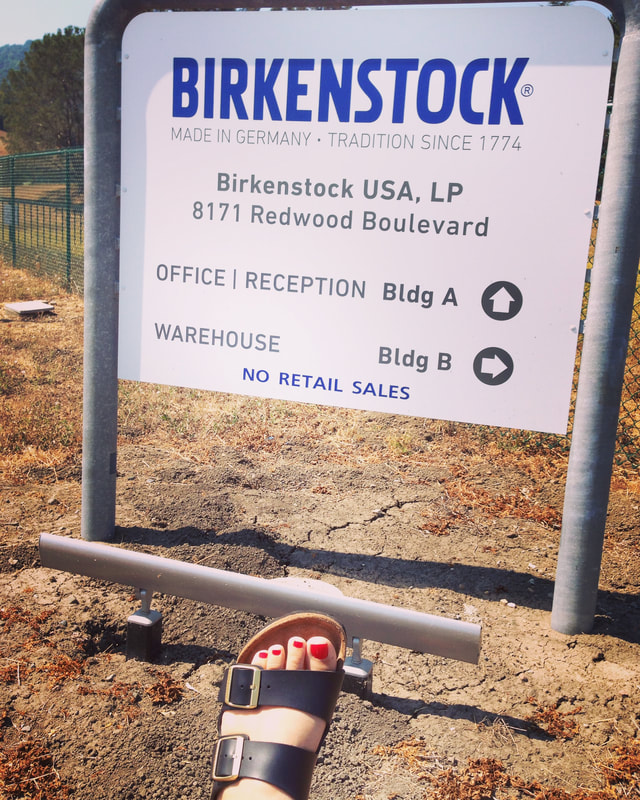
On a fake, the straps are often thinner and stiffer, with a shiny or plasticky surface. The edges might be rough or uneven, and the stitching could be crooked or loose. The buckles are another telltale sign. Real buckles are made of a solid metal alloy, and they have a nice weight to them. The engraving on the buckle—usually the BIRKENSTOCK name or the 'B' logo—is sharp and clean. On a fake, the engraving might be shallow, uneven, or filled with paint that chips off.

The Box and Label: Small Details, Big Clues

If you're buying new, the box can tell you a lot. An authentic BIRKENSTOCK box has a clean, white label with the style name, color, size, and width printed in a specific font. The text is aligned and legible, and the size notation follows a standard format (like '38' or '42', with 'N' for narrow and 'R' for regular). The box itself is sturdy, not flimsy, and it has a slight sheen to it.

Counterfeit boxes are often poorly printed, with blurry text or mismatched colors. The label might be stuck on crooked, or the size might be abbreviated in a weird way. I've seen fakes where the box says 'BIRKENSTOCK' but the font is slightly off, or the 'C' in 'Cork' is lowercase. These are small details, but they add up.
Width and Fit: How Real Sandals Should Feel
When you put on an authentic Birkenstock, it should feel snug but not tight. The width options—narrow and regular—are designed to accommodate different foot shapes, and the footbed is slightly narrower at the heel and wider at the toes. On a fake, the fit might feel off: either too tight in the toes or too loose in the heel. The straps should be adjustable, with a secure buckle that doesn't slip.
Remember, authentic Birkenstocks have a break-in period. The cork footbed will mold to your foot, but it takes time. If a new pair feels like a feather pillow from the first step, that's a red flag—real cork is firm and supportive. I always tell walkers to start with short walks and gradually increase the time. That's how you build a good relationship with your sandals.
Why I Buy From Authorized Retailers
I've been buying BIRKENSTOCK sandals for years, and I've learned that the safest way to avoid fakes is to buy from authorized retailers. That doesn't mean you can't find a good deal—I've found great prices on sale at reputable stores—but if a deal seems too good to be true, it probably is. I've seen counterfeit Arizonas sold at a discount, and they fell apart within weeks.
When you buy from an authorized retailer, you know you're getting the real cork footbed, the genuine Birko-Flor or leather, and the proper width support. That's what makes BIRKENSTOCK sandals so good for walking—they're built to last and to support your feet on every adventure. So take your time, do your checks, and invest in the real thing. Your feet will thank you.
People also search
BIRKENSTOCK sandals waterproof options EVA
BIRKENSTOCK Arizona two strap sandal fit true to size
BIRKENSTOCK sandals for nurses and long shifts
can you wear BIRKENSTOCK Boston in rain
BIRKENSTOCK Madrid big buckle trend 2026
how to stop heel slipping in BIRKENSTOCK Arizona
how to stretch tight BIRKENSTOCK sandals at home
best BIRKENSTOCK for city walking tour
best BIRKENSTOCK for weekend travel packing
BIRKENSTOCK cork latex footbed how long it lasts
BIRKENSTOCK footbed packed out when to replace
BIRKENSTOCK kids vs adult sizing for small feet
BIRKENSTOCK Mayari toe loop vs Gizeh fit
BIRKENSTOCK Arizona outfit with linen summer clothes
BIRKENSTOCK EVA sandals for beach and pool
BIRKENSTOCK sandals for plantar comfort walking
BIRKENSTOCK sizing guide regular vs wide width
BIRKENSTOCK Boston shearling vs regular Boston
BIRKENSTOCK sizing EU to US conversion chart
best BIRKENSTOCK sandals for standing all day at work
BIRKENSTOCK Arizona vs Milano for ankle support
best color BIRKENSTOCK Arizona for everyday
BIRKENSTOCK Arizona mink vs tobacco oiled leather
BIRKENSTOCK Boston suede water stains how to clean
BIRKENSTOCK footbed technology cork and latex
are BIRKENSTOCK cork footbed sandals good for all-day walking
is BIRKENSTOCK The Real Deal: A Contour Walk Guide to Authentic Birkenstock Sandals · BIRKENSTOCK Contour Walk true to size
BIRKENSTOCK Arizona oiled leather darkens over time
BIRKENSTOCK Arizona midnight vs black oiled leather
how to store BIRKENSTOCK cork footbed between seasons
Trending BIRKENSTOCK searches
arch support sandals
BIRKENSTOCK sizing
BIRKENSTOCK original footbed
BIRKENSTOCK tobacco leather
BIRKENSTOCK new colors
BIRKENSTOCK Arizona
ankle strap Milano
Boston vs Kyoto
BIRKENSTOCK Madrid sandal
BIRKENSTOCK Kyoto clog
BIRKENSTOCK wide width
BIRKENSTOCK for work standing
BIRKENSTOCK Big Buckle
BIRKENSTOCK vegan Birko-Flor
BIRKENSTOCK cobblestone walking
oiled leather clog care
BIRKENSTOCK Mayari
BIRKENSTOCK soft footbed
Birkenstock clog socks
BIRKENSTOCK airport shoes